

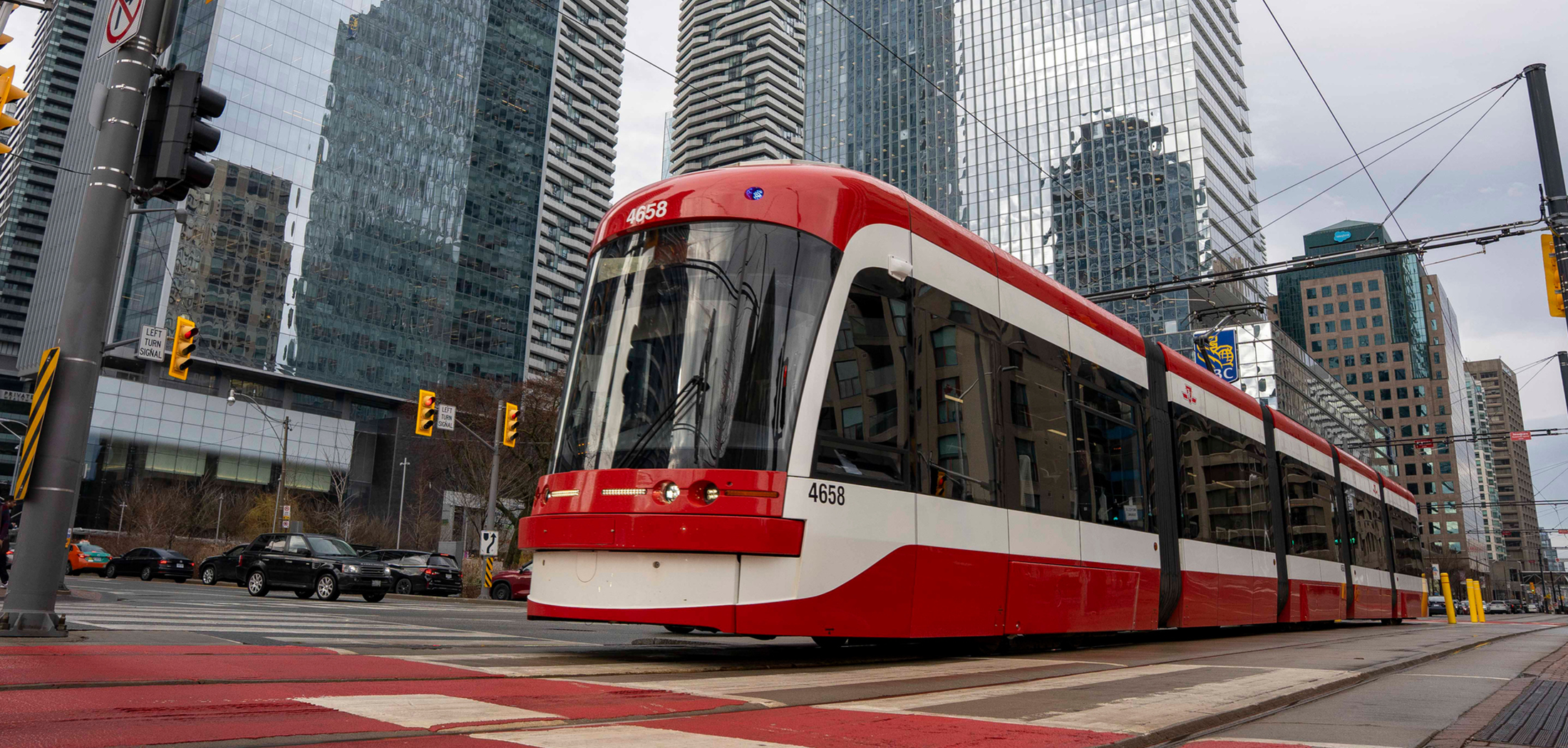

Toronto’s streetcar network is one of North America’s largest and most unique. For locals and visitors alike, understanding the rules around boarding and exiting a streetcar could be the difference between a safe commute and a life-altering injury.
Why Are Toronto Streetcars More Dangerous Than Buses?
If you are visiting Toronto this summer or are simply new to riding the TTC, the streetcar network can feel unfamiliar. Unlike buses, streetcars run along the centre of busy roads like King Street, Queen Street, and Spadina Avenue, stopping in the middle of traffic to let passengers on and off. There is often no curb, platform, or barrier between you and moving vehicles. You step directly into a live lane of the road.
Many cities that once operated streetcars replaced them with buses decades ago, precisely because buses pull to the curb. Toronto kept its streetcar lines, which means that every time a streetcar stops, riders are exposed to traffic. That exposure poses a very real and ongoing danger.
Do Drivers Have to Stop for Toronto Streetcars?
Ontario Highway Traffic Act, Section 166 makes the rule clear. Any driver, cyclist, or rider on horseback who overtakes a streetcar stopped to take on or discharge passengers must not pass the streetcar or come within two metres of its open doors until all passengers have safely boarded or reached the sidewalk. Passing open streetcar doors is not a grey area; it is illegal, and it carries real consequences.
Despite this law, violations are disturbingly common. TTC’s own “Stopping Saves Lives” campaign, launched in June 2025, was created in direct response to the growing number of vehicles illegally passing open streetcar doors. TTC Campaign Between 2014 and 2024, 141 people were struck by vehicles while boarding or exiting a streetcar. TTC customers and operators report multiple near-misses every single day.
The current fine for passing open doors is up to $183.25, plus three demerit points. The TTC is also piloting automatic camera enforcement technology on streetcars, designed to capture license plate information when motorists illegally pass open doors, meaning enforcement is becoming more systematic, not less.
How Can Streetcar Riders Stay Safe?
The law puts the burden on drivers to stop. But riders can also take steps to protect themselves, especially during the busy summer months when streets are crowded with tourists, cyclists, and distracted drivers who may not be familiar with Toronto’s streetcar rules.
Pause at the door
Before stepping off a streetcar, take one moment at the door. Look left. Look right. Confirm that traffic has come to a full stop before you step into the roadway.
Do not assume cars will stop.
The law requires vehicles to stop, but not every driver knows the rule, especially visitors from out of province or out of the country. Make eye contact with any approaching driver before stepping out.
Watch for cyclists
Cyclists are also required to stop for open streetcar doors. Bike lanes and informal cycling routes can run alongside streetcar tracks. Look both ways, including for cyclists on the right side of the car.
Keep children close
Children exit quickly and unpredictably. If you are travelling with a child, exit first and reach back to guide them, or ensure they understand to wait for your signal before stepping off.
Put your phone away
Looking at your phone as you exit a streetcar dramatically reduces your reaction time and spatial awareness. Look up before the doors open, not after you have already stepped out.
Watch for the “We Stop” decal.
As part of the TTC’s “Stopping Saves Lives” campaign, streetcars now carry “We Stop. You Stop.” decals on the rear of the car. This message is directed at drivers and is a reminder that the stop is legally required.
What Happens If a Driver Illegally Passes an Open Streetcar?
Whether you are a Toronto driver or a visitor driving a rental car, the rule is the same: when a streetcar’s doors are open, you must stop. It does not matter which direction you are travelling, whether you are in a hurry, or whether you see a passenger right away. A child, a senior with a walker, or a person using a mobility aid could be stepping into that road at any moment.
If you cause or contribute to a pedestrian injury while illegally passing open streetcar doors, you face not only a provincial fine and demerit points; you may face significant civil liability for that person’s injuries, lost income, and pain and suffering.
Important for Tourists & Out-of-Province Visitors
Toronto’s streetcar rules are unique in North America. Most cities do not have streetcars running in mixed traffic. If you are renting a car or driving in Toronto for the first time, be aware: when you see a streetcar stopped with its doors open ahead of you, in either direction, you are required by law to stop completely and wait until all passengers are safely clear.
What to Do If You’re Injured Near a Toronto Streetcar
Your health comes first. If you have been struck by a vehicle, call 911 or get to an emergency room as quickly as possible.
Obtaining medical records that document the date and nature of your injuries will be essential for any legal claim. Take photographs of the streetcar, including its number, route, and location, as well as any vehicles involved and their license plates. Collect the names and contact information of any witnesses. Record details such as the date, time, direction of travel, and the exact stop location. Report the incident to the streetcar operator and request an incident report number. If a vehicle was involved, ensure you file a police report.
What Are the Deadlines for a TTC Streetcar Injury Claim in Toronto?
Being struck by a vehicle while exiting a streetcar can result in serious, life-changing injuries. If you or someone you know has been injured in this kind of incident, there are legal rights available to you, but the deadlines to protect those rights are very short.
Ontario law imposes strict notice requirements on injury claims involving the TTC and the City of Toronto. Missing these deadlines can permanently bar your right to compensation, regardless of how serious your injuries are.
10 days – Written notice of your claim must be served on the TTC if the TTC’s conduct contributed to your injury under Ontario’s Municipal Act, 2001 S.44(10). This notice must include the date, time, location, and nature of the accident and your injury.
7 days – If a motor vehicle was involved, you should notify your own automobile insurer of the collision within 7 days, or as soon as reasonably possible, to protect your access to Statutory Accident Benefits (SABS).
2 years: The general limitation period under Ontario’s Limitations Act, 2002 for commencing a personal injury lawsuit. The clock typically starts on the date of injury.
Do Not Wait to Speak to a Personal Injury Lawyer
The 10-day notice requirement for TTC-related claims is one of the shortest deadlines in Ontario personal injury law. Missing it can jeopardize your entire claim. Courts have occasionally excused late notice where there is a reasonable explanation and no prejudice to the municipality, but this is never guaranteed. The safest course of action is to contact a personal injury lawyer the same day or as close to it as possible.
Depending on the circumstances of your injury and who is at fault, you may be entitled to compensation for medical and rehabilitation expenses, lost income (past and future), pain and suffering, and the cost of care and assistance at home. The specific claims available to you will depend on whether the at-fault party is a private driver, the TTC, the City of Toronto, or some combination of these.
Injured Near a Toronto Streetcar?
The legal deadlines for TTC-related injury claims are among the shortest in Ontario. Our team is here to help you understand your rights and act before critical deadlines pass.
Every personal injury case is different, and the outcome of any claim depends on the specific facts and circumstances involved. If you have been injured, please consult a qualified personal injury lawyer as soon as possible to obtain advice specific to your situation. Howie, Sacks & Henry LLP is a personal injury and class action law firm based in Toronto, Ontario, representing clients throughout the province.
Contact HSH today for a free consultation.